Haiti’s Lost Childhood: A Nation at War with Its Future
Ralf S. Rho
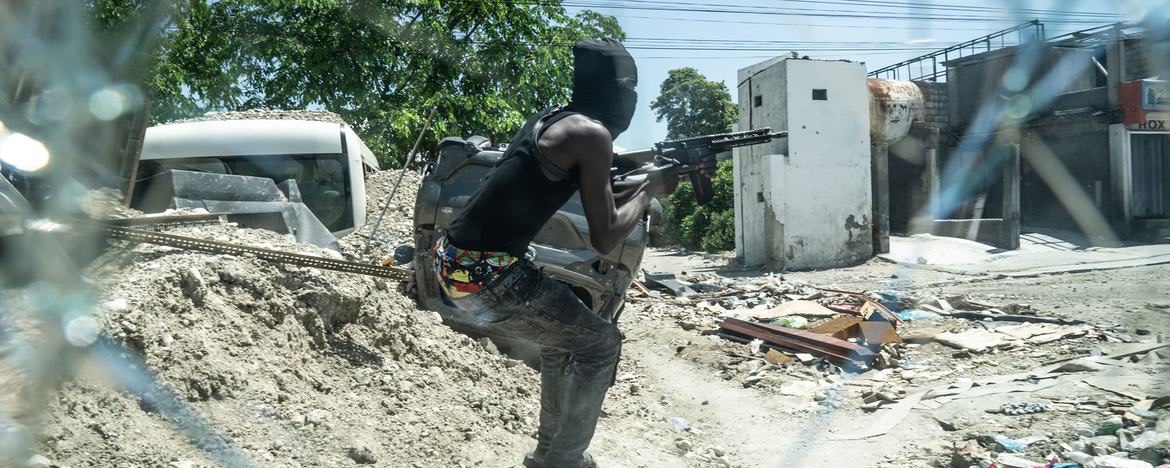
In the shadows of Port-au-Prince, children are not learning their ABCs. Instead, they are learning to load guns, serve as lookouts, and engage in violence. At an age when they should be pursuing their dreams, they are instead fleeing for their lives—or worse, taking someone else’s.
The world refers to it as “gang violence.” However, it is time we acknowledge what it truly is: war. And who are the frontline soldiers? Children—recruited, coerced, and discarded. Our most vulnerable citizens are handed bullets instead of books, trauma instead of toys, and a legacy of violence instead of a future.
In 2024 alone, more than 1,250 Haitian children were forcibly recruited into armed gangs—nearly four children per day. That figure represents a 70 percent increase from the previous year. Many of them are under the age of 13. They are lured with false promises of protection, manipulated by poverty, and abandoned by a society that offers them no real alternative. And yet, the global community has barely flinched.
Because Haiti is not classified as a conflict zone, these child recruits are not recognized as child soldiers. And so, the existing international protections—those that rightly shield children in Uganda, Syria, or Colombia—do not apply to them. But the trauma is the same. The suffering is the same. The injustice is the same.
When do the lives of Haitian children begin to matter to the world?
The gangs that dominate Haiti’s capital—most notably the G9 federation—do not simply function as criminal organizations. They maintain territorial control, have hierarchical structures, and convey political messages. Their violence is systematic, ideological, and profoundly destabilizing. According to the UN, they control 85 percent of Port-au-Prince. They issue ultimatums to the state and speak of revolution. If this isn’t armed conflict, then what is it?
We must expand international legal frameworks that define armed conflict and war crimes to reflect modern realities. Organized gang violence that systematically recruits and exploits children must be recognized as one of the Six Grave Violations against children in armed conflict. This omission is not just a legal gap but a moral failure.
But naming the problem is not enough. Justice must follow.
A hybrid international tribunal—modeled after the Special Court for Sierra Leone—should be established to hold gang leaders accountable for crimes against humanity, including the recruitment of child soldiers. Haiti’s domestic judicial system is too compromised, under-resourced, and infiltrated to pursue such prosecutions alone. International expertise, funding, and oversight will be essential.
Rehabilitation and reintegration efforts must also become a national and international priority. That includes trauma-informed therapy, flexible education programs, vocational training, and community reconciliation. We know these models work—they have been successful in Colombia, Uganda, Liberia, and Rwanda. Haiti’s children deserve no less.
And yes, we will face resistance. Some governments fear that internationalizing gang violence could infringe on national sovereignty. Others worry it would set a precedent. But sovereignty cannot be a shield behind which children are brutalized. We must put child protection above political convenience.
Imagine a 12-year-old boy who escapes a gang after months of violence. He wants to return to school. He wants his life back. But no system exists to receive him, to heal him, or to protect him. He is invisible to the law and to the world. That is the reality in Haiti today.
But we have the tools, the models, and the moral imperative. What we lack is the will.
To the international community, I say this: the children of Haiti are watching. And the question they ask, beneath their silence, is simple:
Will anyone come for us?
It is time we answer—not with words, but with action.